Multi-Nozzle Atmospheric Systems
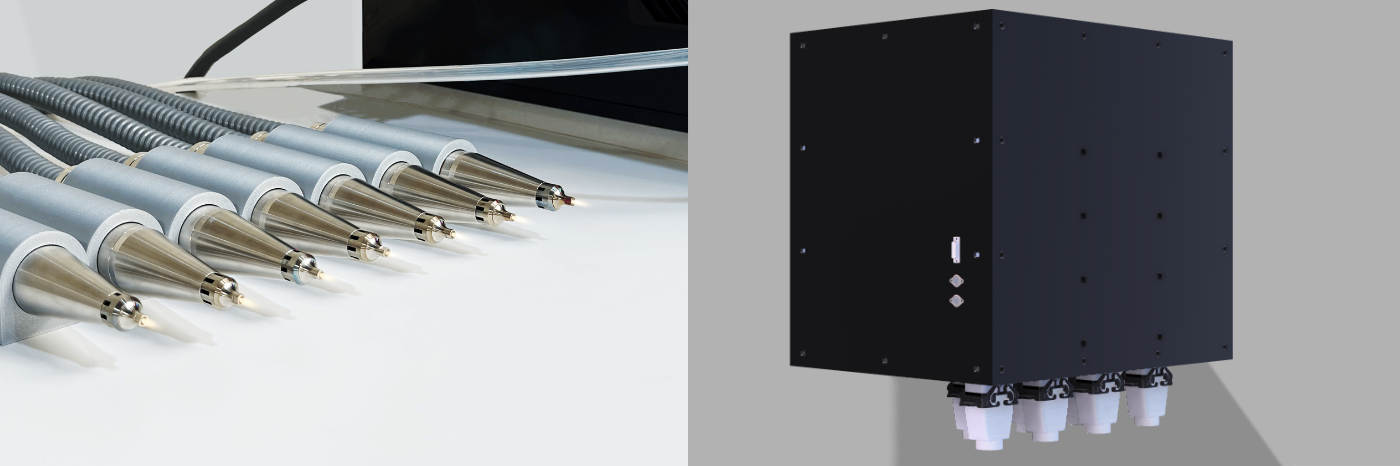
Multi-Nozzle Atmospheric Plasma Systems for Wide-Area Surface Treatment
Every atmospheric plasma nozzle treats a defined track, roughly 8–12mm wide. That track is ideal for a bond edge, a seal line or a localised feature. When the treatment area is wider, or the line moves too quickly for repeat treatment, a single nozzle becomes the bottleneck. A multi-nozzle atmospheric plasma system places several nozzles side by side and fires them in parallel, so the full treatment width is addressed at once.
Why Treatment Width Matters
With one plume and a wide surface, there are two options: bring the part back under the nozzle several times, or carry the nozzle across the part on a robot. Both add time to every part, and on a continuous line that time is rarely available. A parallel array removes the trade-off: width is covered by adding nozzles, not by adding passes.
This is about more than throughput. Plasma-activated surfaces, particularly composites, have a limited window before bonding or painting, so treating the whole area at once helps keep every part of the surface within that window.
Formats That Suit Multi-Nozzle Treatment
- Continuous webs and films, such as polyimide thermal films used in battery pack assembly
- Stamped tabs and busbars on continuous strip, treated across the full strip width
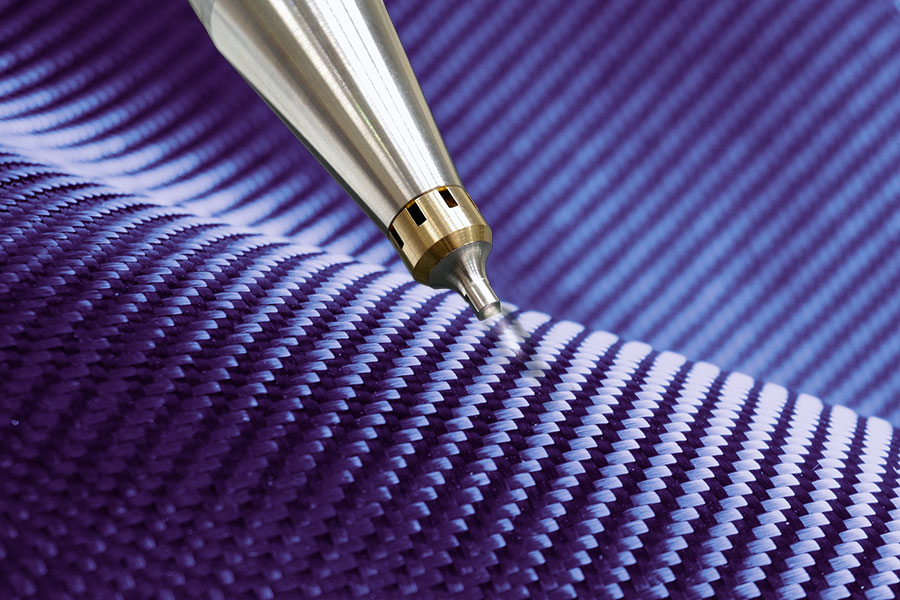
- Large moulded and composite panels, including aerospace and wind-energy structures carrying mould-release residue
- Rows of parts on an indexing line, treated together rather than one at a time
- Mixed-material assemblies, where aluminium, polymer and cell surfaces all need preparing in one in-line step
Why opt for multi-nozzle over single wide area nozzle?
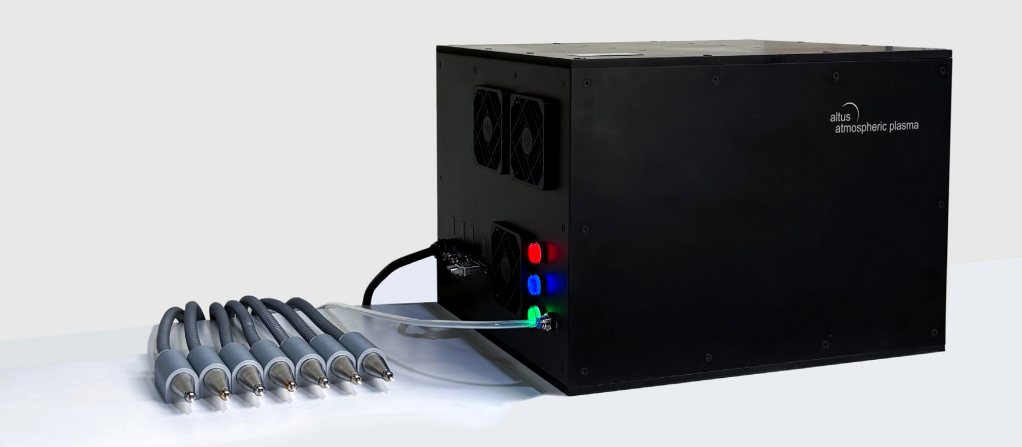
Each nozzle in the Altus array is independently controlled, so treatment can be switched on, off or adjusted nozzle by nozzle to match the part. With the right automation, this lets Altus follow contours, reach into recesses and treat tight radii and intricate features, while still being able to cover wider areas by running all the nozzles together. When treating large, flat surfaces with no complex geometry, a single wide nozzle is usually the simpler choice. Where parts vary in shape, or only certain areas need treating, a multi-nozzle array gives you that control.
Our Models
Altus
Relevant Resources
Knowledge Articles

Case Studies
Video
Henniker Plasma - Atmospheric Plasma Robot
Atmospheric plasma treatment is ideal for in-line processing & very effective at activating and cleaning the surface of a material, increasing the adhesion characteristics and making it easier to bond, paint and glue. Henniker's atmospheric plasma surface treatment systems can be integrated with a 3-axis robot to follow precise treatment patterns as part of an automated process..
Plasma Surface Activation Explained
Plasma Surface Activation Explained.
The fourth in our series of videos about plasma treatment technology, this video explains how plasma surface activation works and the results you can achieve.
Plasma Cleaning Explained
Plasma Cleaning Explained.
The third in our series of videos about plasma treatment technology, this video explains how plasma cleaning works and which systems can provide the best quality treatments.
Atmospheric Plasma Torch
Atmospheric plasma torch for the local pretreatment (cleaning, surface activation) of different materials. In this case Automotive parts in an assembly line.